Travel news, information on the best places to visit in Italy, where to go for vacation suggestions of travelers, personal trip experiences, and HIKING: follow me on my exploration of the most exciting adventures
Disclosure:
By the FTC guidelines, I'm required to inform you that some of the links may be affiliate links. When this is the case, if you PURCHASE products through these links, then I receive a (really modest) commission. This blog is independently owned and the opinions expressed here are my own.
Posts contain Google SEARCH Links! These are not Affiliate links nor links to my own content. I write explicitly when a link is to my content or to sponsored content.
“Vacation mode” — light, with some real notes on architecture and a couple of other people’s opinions to counterpoint my voice.
With this heat — when everything, quite literally, melts — everyone is looking for shelter somewhere. Some by the sea, some by the lake, some with their own clever tricks (share yours in the comments: how do you beat the heat?).
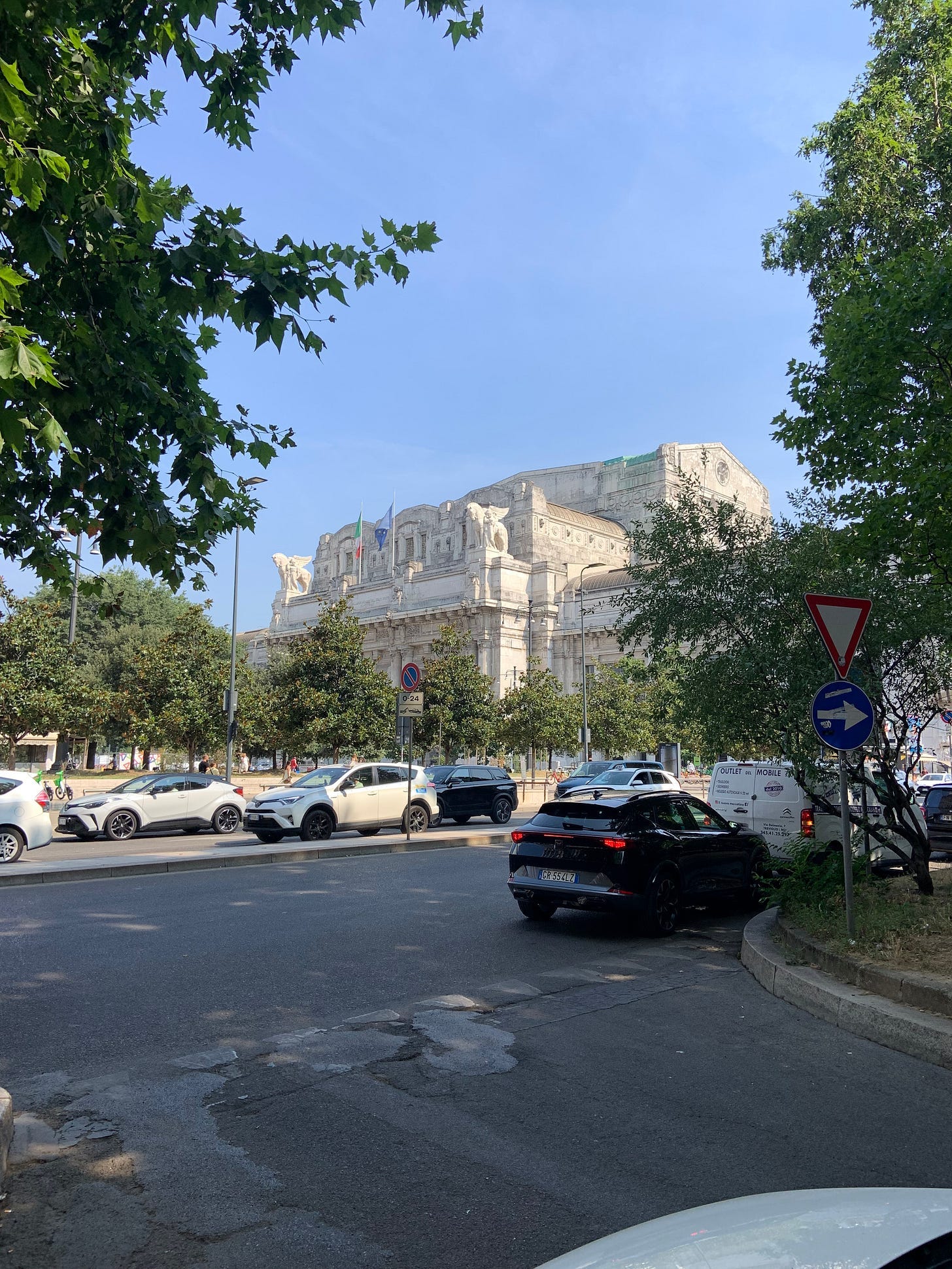
I decided to take a break from my usual “investigations” and simply stroll with you through Milano Centrale, the main railway station of Milan, taking in the Mussolini-era architecture and the general tourist traffic.
Emotional toll of Alpine Warfare. Look up. The mountains before you represent more than just indescribable beauty. They represent the pain and toil of their defenders.
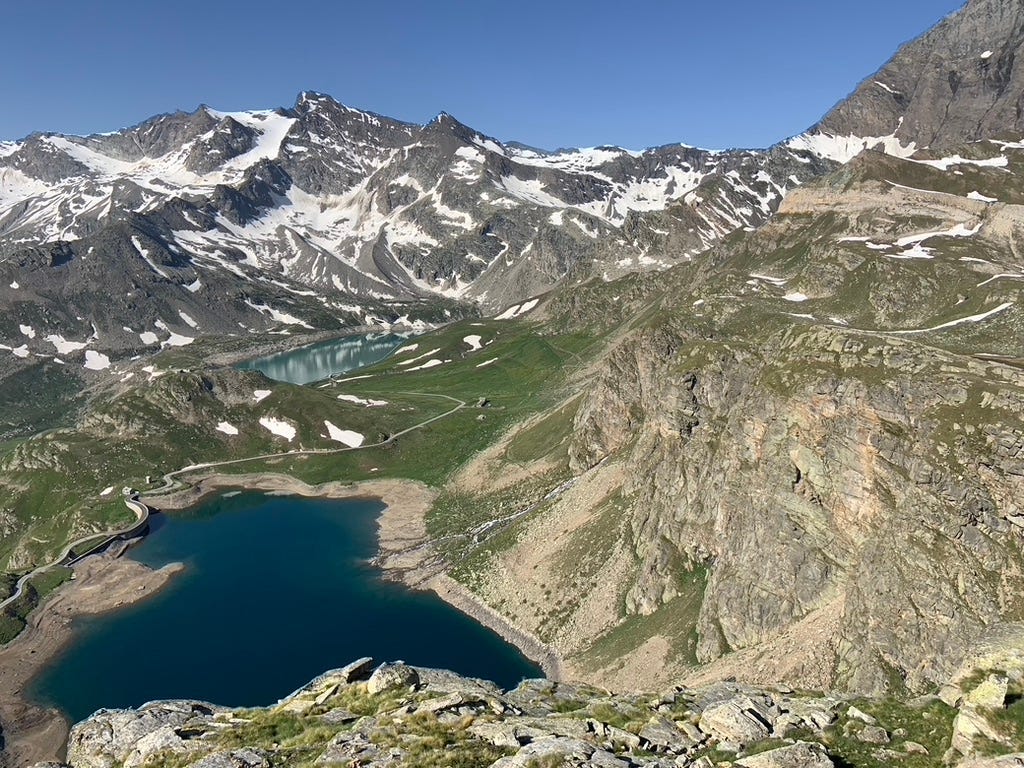
Above Lago Agnel, at 2,300 metres, the ground stops pretending to be gentle. To the right, Punta Violetta climbs to 3,031 metres. To the left, lower and less dramatic, Colle Agnel sits at 2,510.
And somewhere between the two, tucked along the old military track before the Colle del Nivolet, a square of broken stone and concrete is still holding its shape against the mountain.
It doesn’t look like much. A collapsed wall here, a firing slit there, half-buried in rock that the retreating glaciers polished smooth ten thousand years before anyone thought to build on it. You could walk past it and mistake it for a shepherd’s ruin. It is, in fact, a listening post — a small fragment of one of the strangest defensive projects Italy ever attempted: the Vallo Alpino del Littorio.
A wall that was never tested
In 1931, with the memory of the First World War still raw and the newly built Maginot Line rising across the French border, Mussolini’s general staff ordered the construction of a defensive system that would eventually stretch the length of Italy’s Alpine border — from Ventimiglia on the Ligurian coast to Fiume on the Adriatic. It was meant to make the frontier, in the language of the original directives, “hermetic.” Impenetrable.
Five Euros, One Field, and a Business Idea: The Expats Who Brought Their Homeland With Them — and Made It Bloom
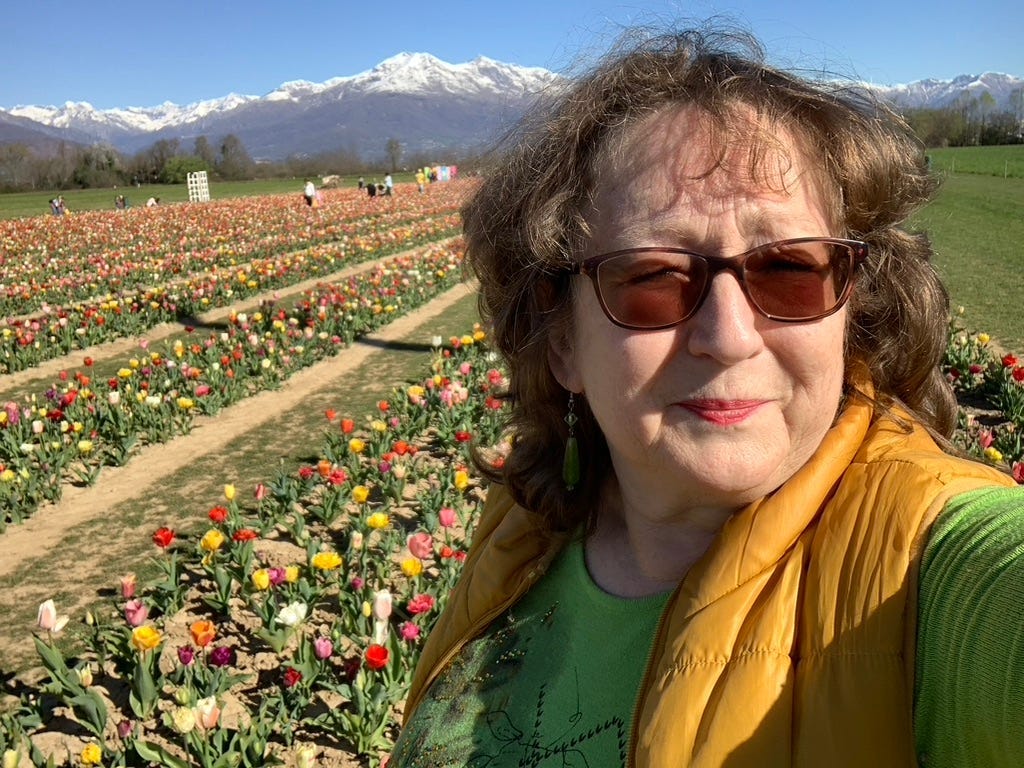
A few days ago, I drove about an hour from Biella to see tulip fields — entire fields of them, not just a vase on a windowsill. I’m a devoted tulip planter, so when I read there were farms worth visiting, I woke up early and went.
The town nearby is medieval and half under construction, its narrow streets the kind that make you wonder whether your sat-nav has quietly given up on you. But then the town ended, and fields spread out on all sides. I turned down a gravel lane — and there they were.
A patch of rainbow in the middle of green. The Alps behind them are still snow-capped. Above everything, a wide, luminous blue sky and light that felt almost apologetic for having been away so long. And the air — cool, crystalline, the sort that makes you stop mid-step just to breathe it.
Historical detective: a silent record left by women who had no other voice.
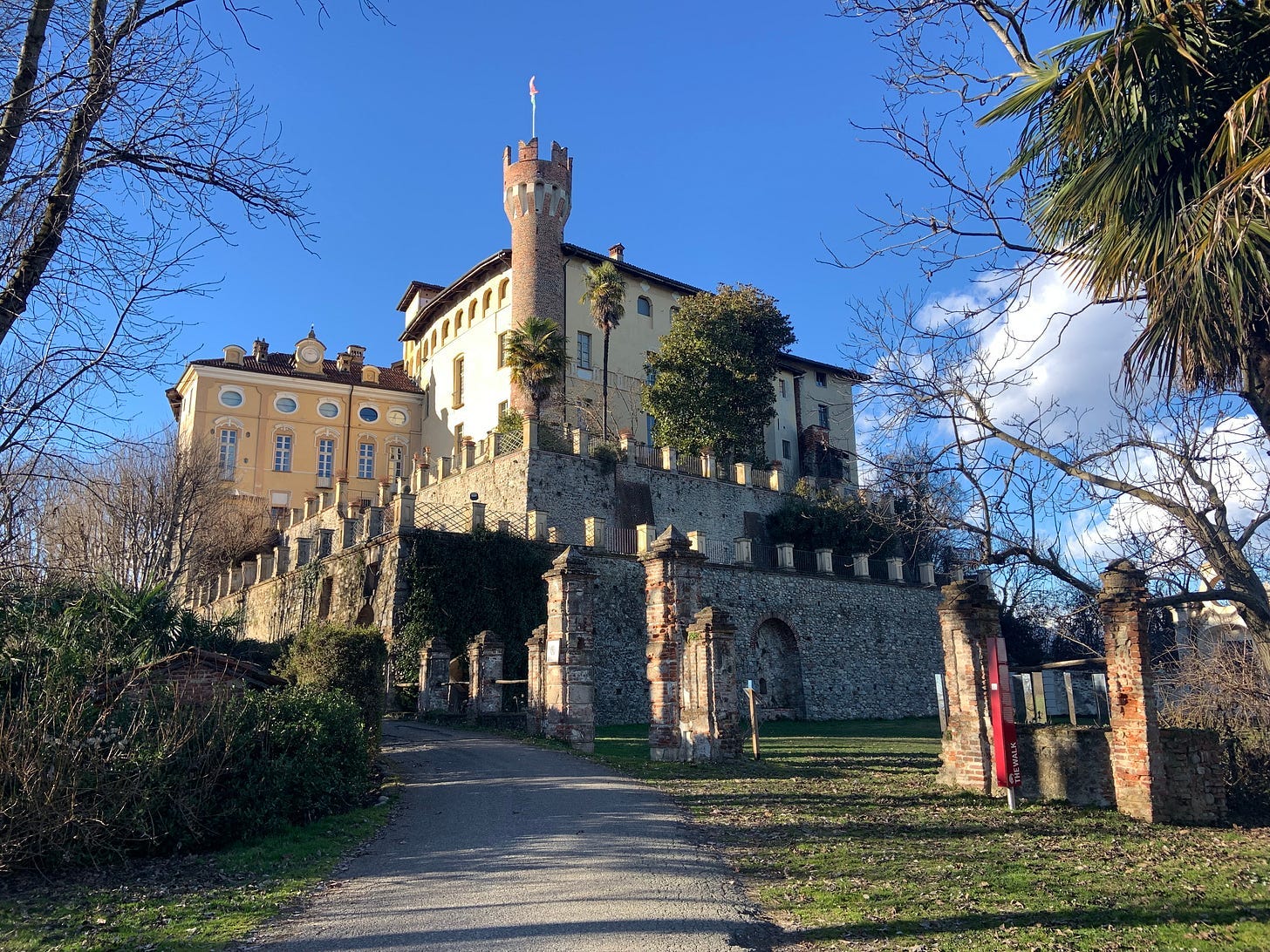
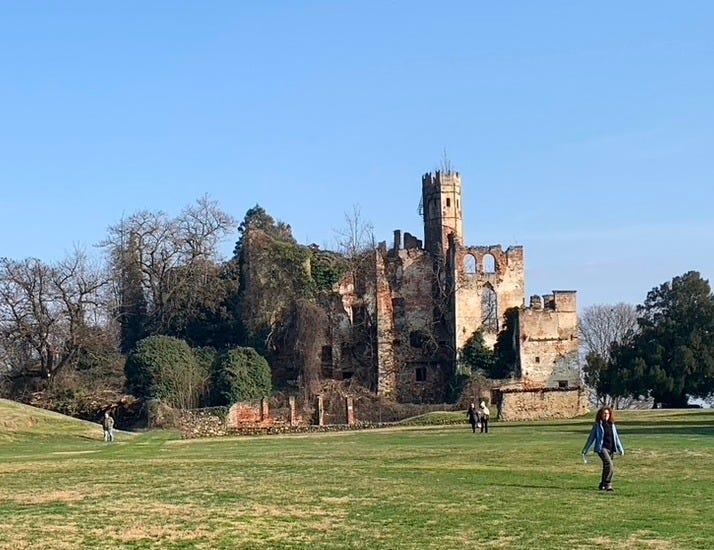
Stand on the hill of Castellengo Castle and look down. The plain spreads out endlessly before you, flat and quiet.
But look closer, just below the castle hill: there is a church. The Church of Saints Peter and Paul sits there as it has for centuries, and even from a distance, something about it feels odd. Its back faces the road. It turns away from you, as if keeping a secret.
That oddness is, in fact, a very precise statement.
Churches were built for people who could not read. Every stone, every orientation, every image was a lesson written in a language older than words. This one follows the ancient rule: the altar faces east, toward the rising sun at dawn. Because Christ was imagined as the sun, the light that conquers darkness. So the faithful entered from the west, from shadow, from what the builders called death, and walked forward toward the light. The door was never meant to face the road. It was meant to face the dark.
Continue reading. If you like my stories, please click "like" and write your opinion. It will motivate me to research and create these stories for you :-)
Before the tourists arrive and the season truly begins, Italy belongs, for a few precious days, to its farmers. Every spring, Italy exhales. And somewhere in that first warm breath, you will find a farmer’s fair.
There is something quietly magical about the agricultural fairs that mark the arrival of spring in Italy.
Long before the first warm days settle in, farmers begin preparing — combing, grooming, loading their most prized animals into trailers — and the whole countryside seems to hold its breath in anticipation.
The undisputed stars of these fairs are the cows. They arrive knowing their worth. Washed with the finest shampoos, udders carefully tended, coats brushed until they gleam — they carry themselves with the serene dignity of royalty, because that is exactly what they are here. They nuzzle each other, accept affection without fuss, and survey the crowds with calm, dark eyes that seem to say: yes, this is all for us.
The “Pragmatic Nobles” who used diplomacy and Church alliances to rule for 400+ years. Dynasty that would learn to survive by being much ‘smarter’ than the rebel Alberico but… TOO much
Every castle has its ghost. At Castellengo, the ghost isn’t a specter drifting through corridors in the small hours — it’s a political tragedy, sealed into the limestone like a man walled up alive.
Before the grand balconies, before the cellars heavy with wine, there was only a cliff, a river, and a man with a loyalty that would cost him everything.
Part I: The Exile’s Gamble — From the Tiber to the Alps
The story does not begin here.
It begins five hundred kilometers to the south, in the sun-hammered hills of Umbria, where a man named Alberico stood in the shadow of the Castello di Monterone and grasped, with the cold clarity that only younger sons ever know, that none of this would ever be his.
Milan, in this post’s focus, is a beautiful, snowy city, and its secrets are revealed here.
We created this winter song inspired by photos of Milan and Moscow, me and Perplexity
Snowflakes dance on lamplight gold, City veins in silver cold. Windows glow, a whispered spell, Evening’s beauty, pure and fell. Breathe the frost, embrace the night — Winter’s kiss, pure delight!
Continue with me on our discovery Milan walk here:
Life in Italy was never easy. Virtually every place and every period could be included in a survival manual. Let's talk about castle secrets again. Once upon a time, there was a castle... “How do we get into that castle?”
The driver nodded and drove off, but the question stayed with me. How do you get in? And more than that: why are there so many castles here that nobody can get into, that nobody even knows about?
It was one of those winter days you wait for all season—actual sunshine, breaking through weeks of fog and rain. I had maybe three hours before the light died, and I was desperate to escape my own head. So I did what any reasonable person does: I opened Google Maps and typed “castles.”
Three popped up. Close together. A loop I could drive in an afternoon.
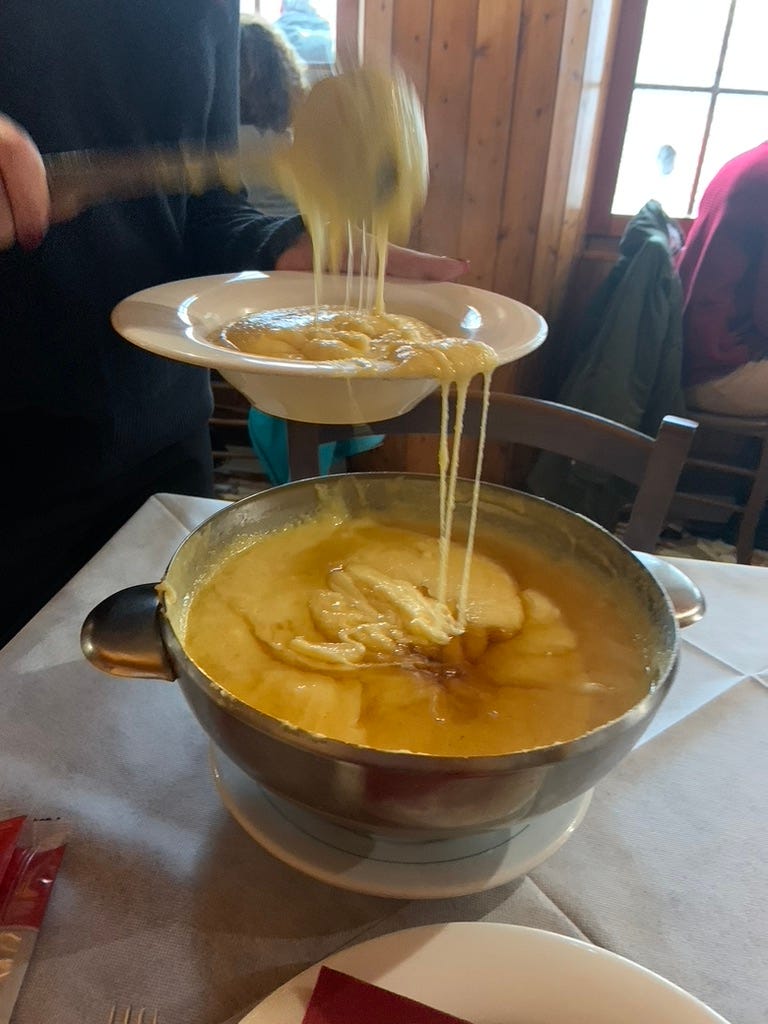
Every year between Christmas and New Year's, my friends and I engage in what has become our sacred ritual: eating our way through Piedmont while pretending we're not just avoiding their in-laws.
Guarded by carved oak against winter's bite, a bas-relief freezes 1400s nobility: stern lords flank ladies in shockingly short tunics. No trailing velvet trains; these hems skim the knee. Why?
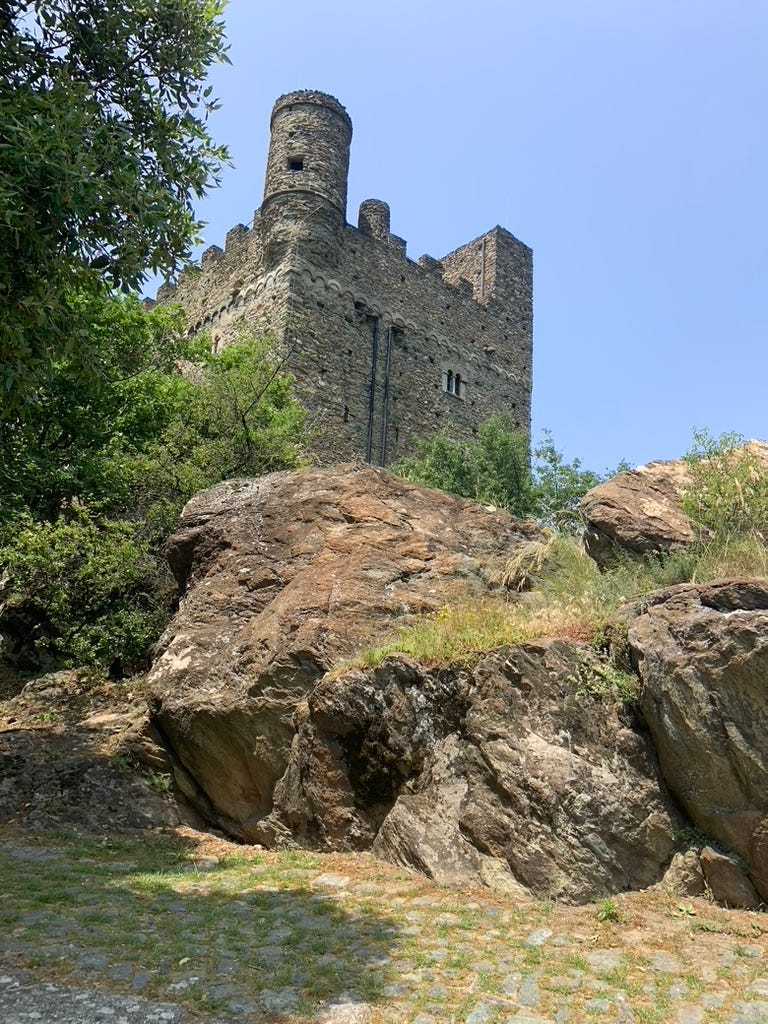
This story is my interpretation of the Saint-Pierre bas-relief on a door in the castle. Tourists visiting the castle do not notice its protagonists, and the guides don’t know what to say to you. They did not see it really. But there is an answer: medieval life was not quite the same as we imagine it from the ceremonial medieval pictures.
The October wind had teeth that morning when Caterina de Challant slipped through the postern gate of Ussel, her mare already saddled and stamping in the shadows. Behind her, in the castle’s great hall, her uncle’s men would be arriving within the hour, riding up the main road with documents and armed escorts, ready to strip her of yet another inheritance. But Caterina had learned to read the rhythms of ambush and lawsuit as other women read psalters.
Twenty-six kilometers separate Biella from Ivrea, but they might as well be centuries apart.
I’ve already told you about Ivrea—the city that dreamed outward, that built its utopia around Olivetti’s vision, that wanted the world to see what it had created. Biella chose differently. When the textile industry that defined it for generations disappeared, Biella didn’t dream of the future. It turned inward.
There was once a sign at the city entrance—or maybe it’s a legend that captures the truth better than facts ever could—that read something like: “Welcome to Biella—but no one’s expecting you.” In 2018, statistics confirmed what the sign suggested: Biella was officially Italy’s least attractive city, the place no one wanted to move to.
And yet.
I fell in love with Biella the moment I arrived, eight years ago, not despite its coldness, but because of what that coldness actually meant.
One day, walking into town from where I live just outside the city, I dropped my shirt—an expensive one I loved.
A Sunday Walk Through 4,000 Years of Mystery (and Wild Boar Territory) in Bessa Natural Reserve, Piedmont
Sunday afternoon, trapped at my computer, the November sun mocked me through the window. Then salvation arrived via email: a package waiting at the Locker. Fifteen minutes there and back, I told myself. Just fifteen minutes.
But the day was impossibly beautiful—that rare late autumn gift when the light turns golden and you can feel winter’s approach making every warm hour precious. I had two, maybe three hours before it got dark. Where could I go?
What flies away is never truly lost. It only waits to be found again, to catch the light, to rest in someone’s palm and tell its story one more time.
Candelo’s main piazza (square) with one of the Ricetto towers
The archeologist’s trowel scraped through mud in Candelo’s main piazza and stopped. Something caught the light—a flash of silver pressed into earth that had held it for centuries.
He knelt, brushed carefully with fingers that knew how to coax history from dirt. A coin emerged: sesino di Gian Galeazzo, Milano 1390. The viper of the Visconti, fierce and unmistakable, is still visible after 635 years in darkness.
Late spring, 1390. The same piazza, but different.
Yesterday’s rain had finally stopped, leaving the world washed clean. The air tasted sweet. Ginevra emerged from the narrow cobbled street into the brightness of the square, and in her palm lay the sesino—warm from her hand, catching the morning sun like a small promise.
Looking for the Slow Life, trying to escape the hectic pace of our lives, is the dream of having a peaceful life like our ancestors. I'll tell you today what their life was really like.
Your phone has buzzed seventeen times since you started reading this. Mine too. We live in an age where everything arrives instantly, yet nothing feels like it truly lands.
But let me take you somewhere else. To a woman I never met, walking a path I’ll never walk.
A friend told me about his grandmother. Every month, she would fill a wooden chest with whatever her hands had made—preserves, woven goods, vegetables from the terraced garden clinging to the mountainside. Then she would lift that chest onto her head and begin to walk.




 This story is my interpretation of the Saint-Pierre bas-relief on a door in the castle. Tourists visiting the castle do not notice its protagonists, and the guides don’t know what to say to you. They did not see it really. But there is an answer: medieval life was not quite the same as we imagine it from the ceremonial medieval pictures.